I Made Dragon Quest I’s Hero A Woman. It Didn’t Work.
When should self-insert protagonists have fixed genders?
may Updated 07/25/2026 1.8k words 9 min read

 Updated 07/25/2026
 1.8k words
 9 min read
Introduction
To date only four mainline Dragon Quest games have had female protagonists: III, IV, IX, and X (see you all in XV and XVI). I’ve long been critical of the series for featuring ostensibly self-insert characters that only work as self-inserts for a presumed male audience. With the exception of Dragon Quest V—a game that explicitly deals with themes of fatherhood—I’ve long thought that the rest of the series would cleanly fit a female hero about as well as games like Dragon Quest III and IV do. While Dragon Quest’s heroes typically fall into traditionally masculine heroic archetypes—to the point of Dragon Quest III’s initial English release misgendering the hero as male in dialogue as a consequence of the gender-neutral Japanese script—those archetypes never serve as the primary lens with which to view their adventures. At least, that’s what I thought until I hacked Dragon Quest I.
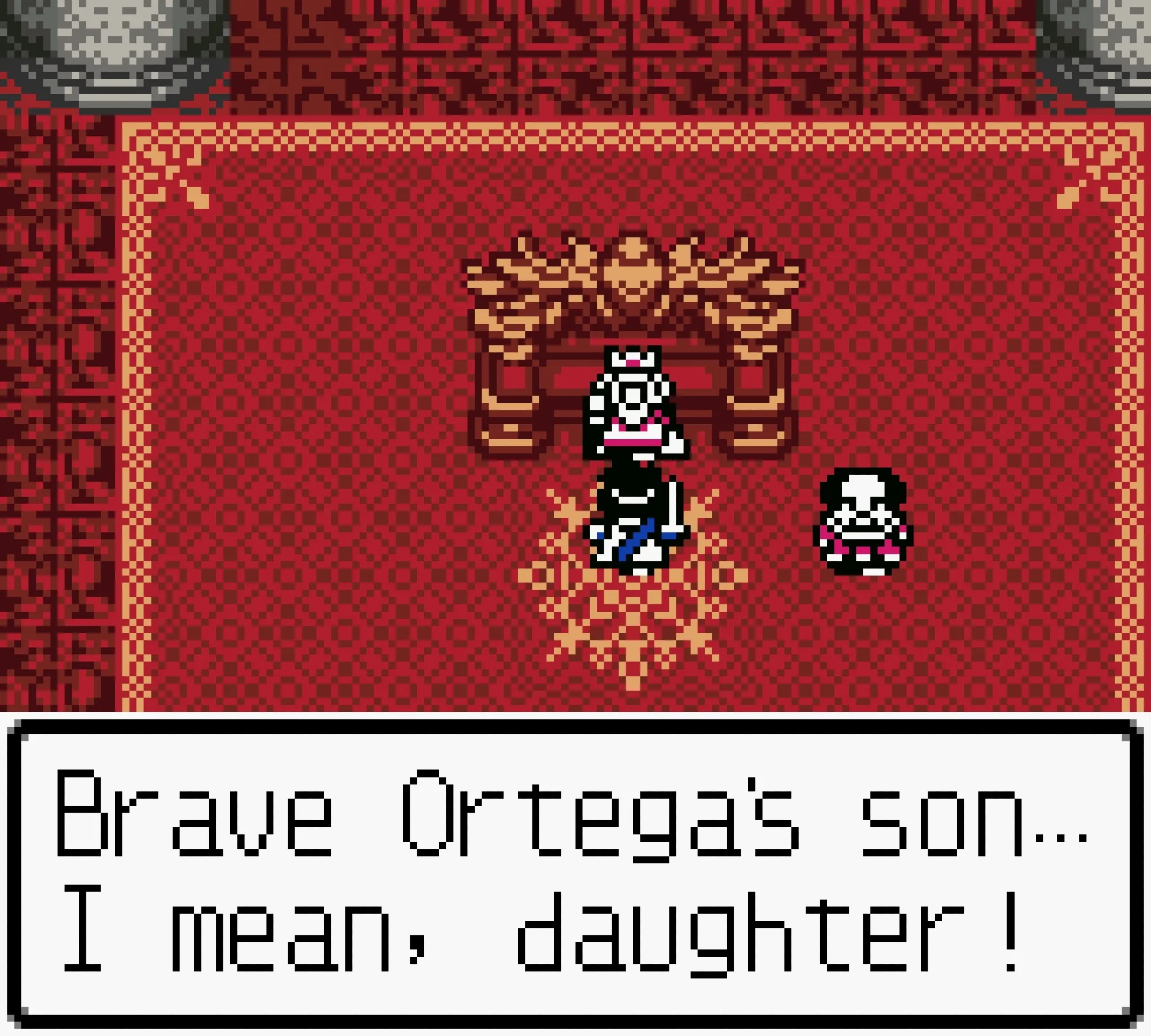
How to Gender-Swap Dragon Quest
The original Dragon Quest is a fairly simple game, one that can be beaten in just a few hours. Before starting a recent playthrough of the game, I let my festering annoyance with the series’ imposed masculinity get the better of me and looked into editing the script. While I’d never made any kind of ROM hack before, some cursory research made it clear that script editing was among the easiest hacks to make, especially if I was willing to work within the confines of the original script to avoid adjusting pointers.
Using the Game Boy version of Dragon Warrior I & II as a base, I opened up the original ROM in a hex editor and began methodically reading through the original game’s script to note any gendered language. It’s a weird feeling—to see a game dissected into raw data, even if the vast majority of it is completely illegible in this format.
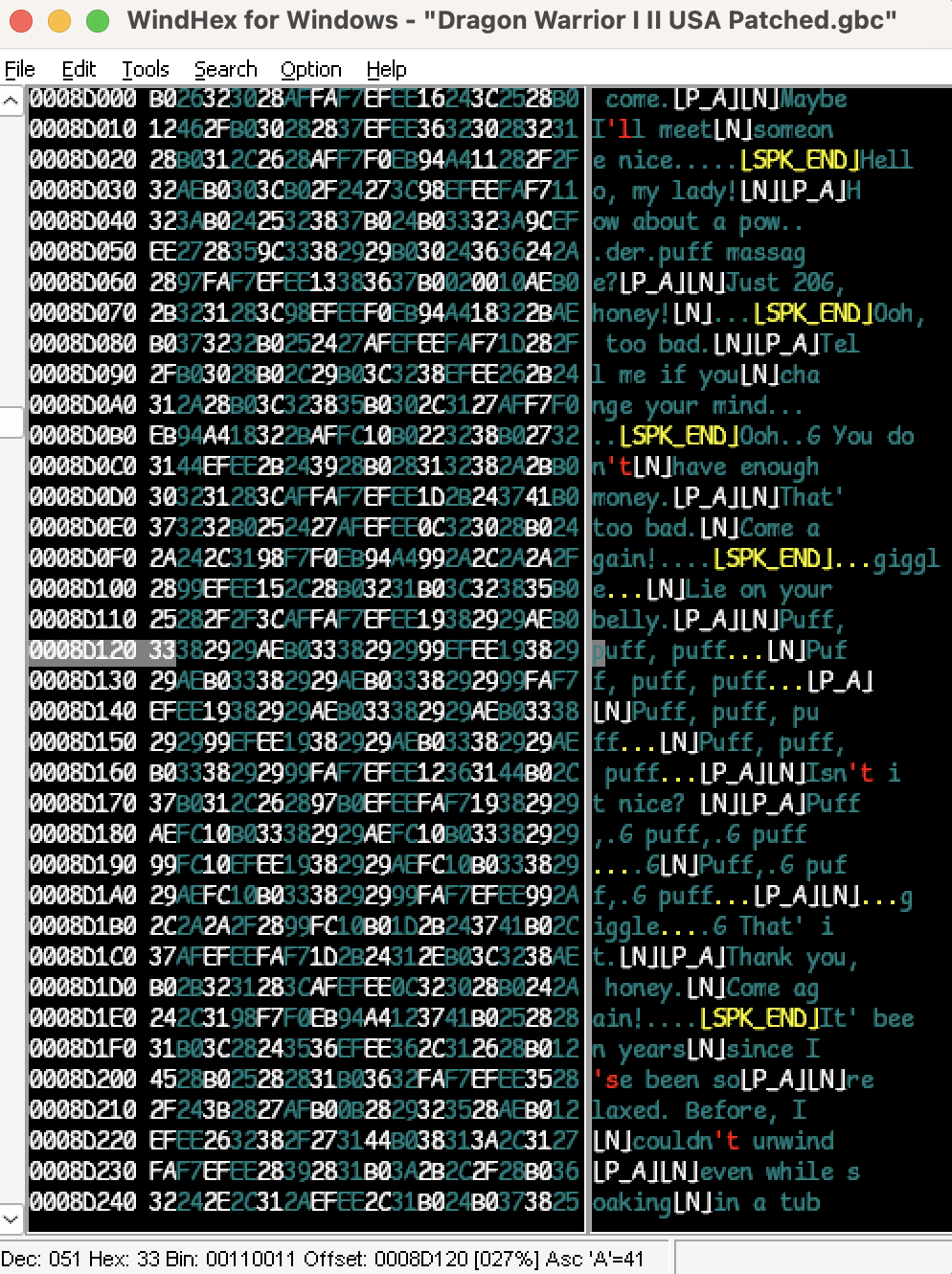
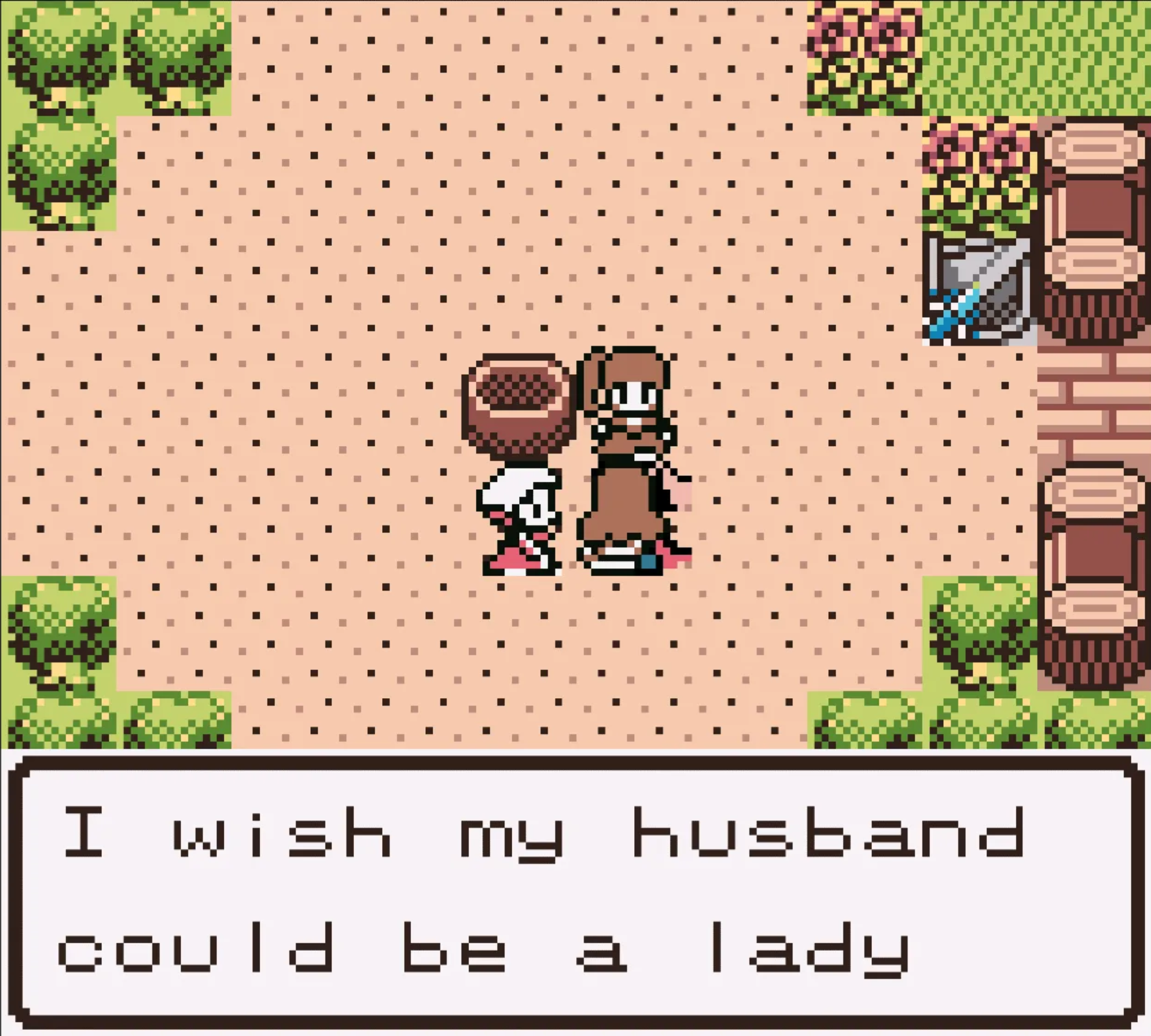
Attempting to maintain the same byte count as the original script was fairly tricky, with some fairly awkward adjustments to phrases like “handsome fellow” (turned “beautiful woman”) and “Hello, big boy!” (turned “Hello, my lady!”). Trickier still were lines like “You really are quite the man! / I wish my husband would learn a few things from you” which I chose to rewrite as “You really are quite a woman! / I wish my husband could be a lady just like you.”
Why You Can’t Gender-Swap Dragon Quest
Detangling the implicit masculine power fantasy from Dragon Quest I was always going to require more than a few simple line rewrites, and without party members or an objective-driven narrative the game was always going to center around the player’s actions in fulfilling this masculine role.
It’s something that underlies every facet of the original game. The player follows in the footsteps of Dragon Quest III’s Erdrick (who has been remembered as a man regardless of their original gender and the contributions of their party members largely forgotten). Isolation is central to the game’s narrative—not only does the protagonist travel alone, but the appearance of monsters has prevented most people from leaving town. The game compares the hero to a number of other men over the course of their journey—the aforementioned husband, who set out to search for keys but found himself robbed and afraid to return empty handed, as well as a number of unnamed warriors who attempted to defeat the Dragonlord but failed to return. These men failed to complete the game’s central quest objectives, and in their failure empower the player’s own masculinity for succeeding.
One of the game’s central objectives is to rescue Princess Gwaelin, a fairly stereotypical damsel and distress plot. If the player rescues her and brings her home (quite literally princess carrying her halfway across the world), she immediately confesses her love for them—and the game forces you to reciprocate. At the end of the game, the hero—in their only explicitly written line of dialogue—refuses the King’s offer to take his place and sets out with the Princess to found his own kingdom. It’s a tale as stereotypically heterosexual as it gets—even if we ignore Dragon Quest II’s focus on the hero’s descendents, something hard to do given the trilogy’s explicit focus on bloodlines, swapping in a female hero (or even a male Prince, if we have to keep things heterosexual) carries with it decidedly different narrative subtext.
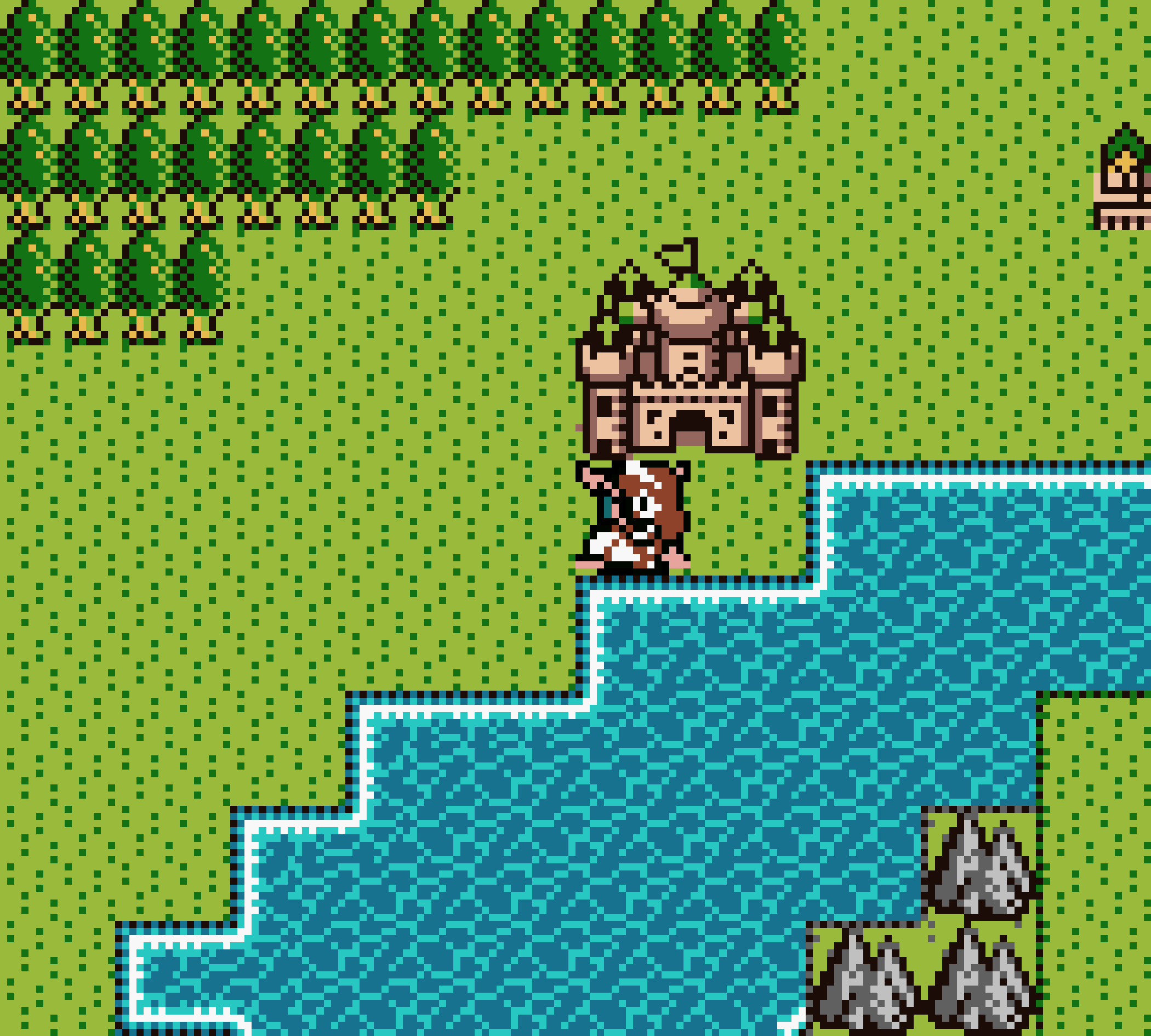
Alternatively, the player can choose to carry Gwaelin around for the rest of the adventure, though she never plays an active role in the hero’s adventure and the ultimate outcome remains the same, though her love feels more believable given the time they actually spend together.
Dragon Quest I HD-2D Remake
There are a number of different releases of Dragon Quest I, each of which largely follow the original’s script and structure (and consequentially, its’ gender roles). But it was in replaying the Dragon Quest I HD-2D Remake following an interesting thread about the game’s themes by Somebakedgood on Bluesky that reinforced my belief in the original game’s underlying masculinity.
Dragon Quest I HD-2D features a complete narrative and structural overhaul to the original game: The original’s open-ended structure has been completely upended by a more linear narrative, with the introduction of a number of new characters. In some ways, the remake rebukes the original’s gender roles. The previously implied male warriors and travelers now include women, from Gwaelin’s unnamed guard to a party of “would-be heroes” mimicking the party from Dragon Quest III. But despite these additions, Dragon Quest I HD-2D is still Dragon Quest I and these new characters largely still serve as contrasts to boost the protagonist’s image by comparison. The player ultimately fights each boss alone, even when their opponents aren’t. The revamped combat system has little room for error, requiring specific strategies in order to overcome each of the game’s bosses. While the new characters do aid you on your journey it is ultimately your actions—alongside the equipment and abilities you find—that reinforce your role as the hero.
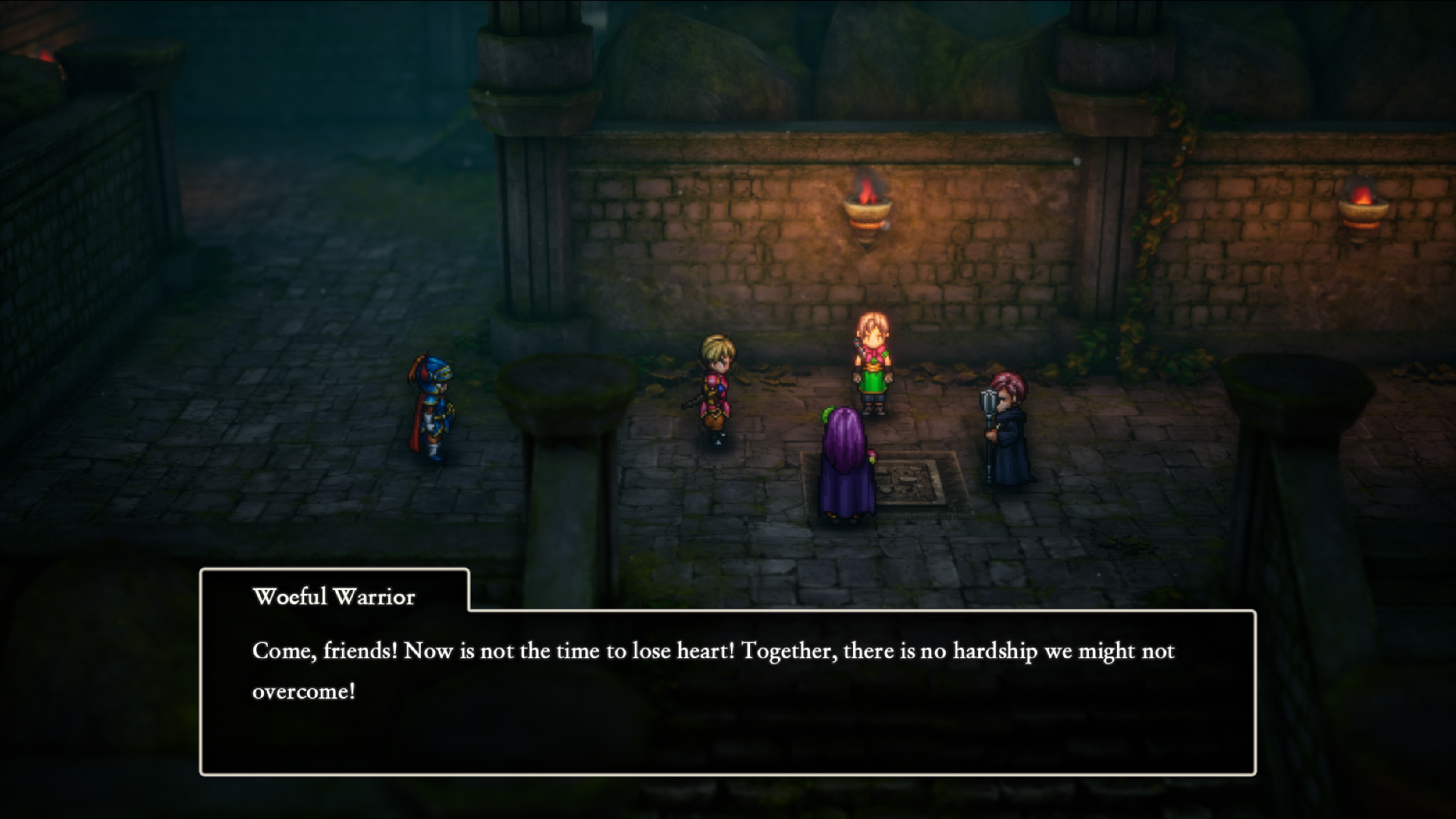
While Gwaelin herself largely plays the same role in the remake—immediately falling in love with the hero and setting out to found a new country, her immediate confession is at least expanded to include an offer to continue travelling with the hero (before she immediately backs down at the slightest pushback). Should the player instead choose to (literally) carry her through the end of the game, her role is slightly elaborated upon. She’s integrated into the game’s newly-added cutscenes, though she never takes on a more active role than the companions in 3D Zelda games—she’s there explicitly in service of the silent protagonist, and her presence largely goes unacknowledged, save for an encounter with the mirages who trapped her in an illusion earlier in the game. Even here, it ultimately falls on the hero to assail them in combat—while she occasionally provides support in battle she is never treated as a full-fledged party member.
Conclusion
While I love Dragon Quest I for its’ gameplay and atmosphere, it’s impossible to ignore the rigid conservatism of its’ underlying gender roles. The hero’s masculinity is repeatedly reinforced through an emphasis on masculine traits and actions, with repeated comparisons to other characters who fail to live up to the same standards and a central romantic relationship that could not be more steeped in stereotypical heterosexual ideals. None of these things make Dragon Quest I a bad game; it’s a masterclass in adventure game design that still holds up to this day. But rewriting Dragon Quest I to have a female protagonist requires far more work than just swapping in a different set of pronouns, it requires disentangling gender roles at every level of the game’s narrative.
And if it’s this complex for a game as relatively simplistic as Dragon Quest I, what does that say about later Dragon Quest titles? What about other games with player analog silent protagonists, like Persona and Zelda? Without intentionally writing the games with intentional gender neutrality, overhauling them requires substantial rewrites in order to accomodate a shift in gender to the original narrative’s gender roles.
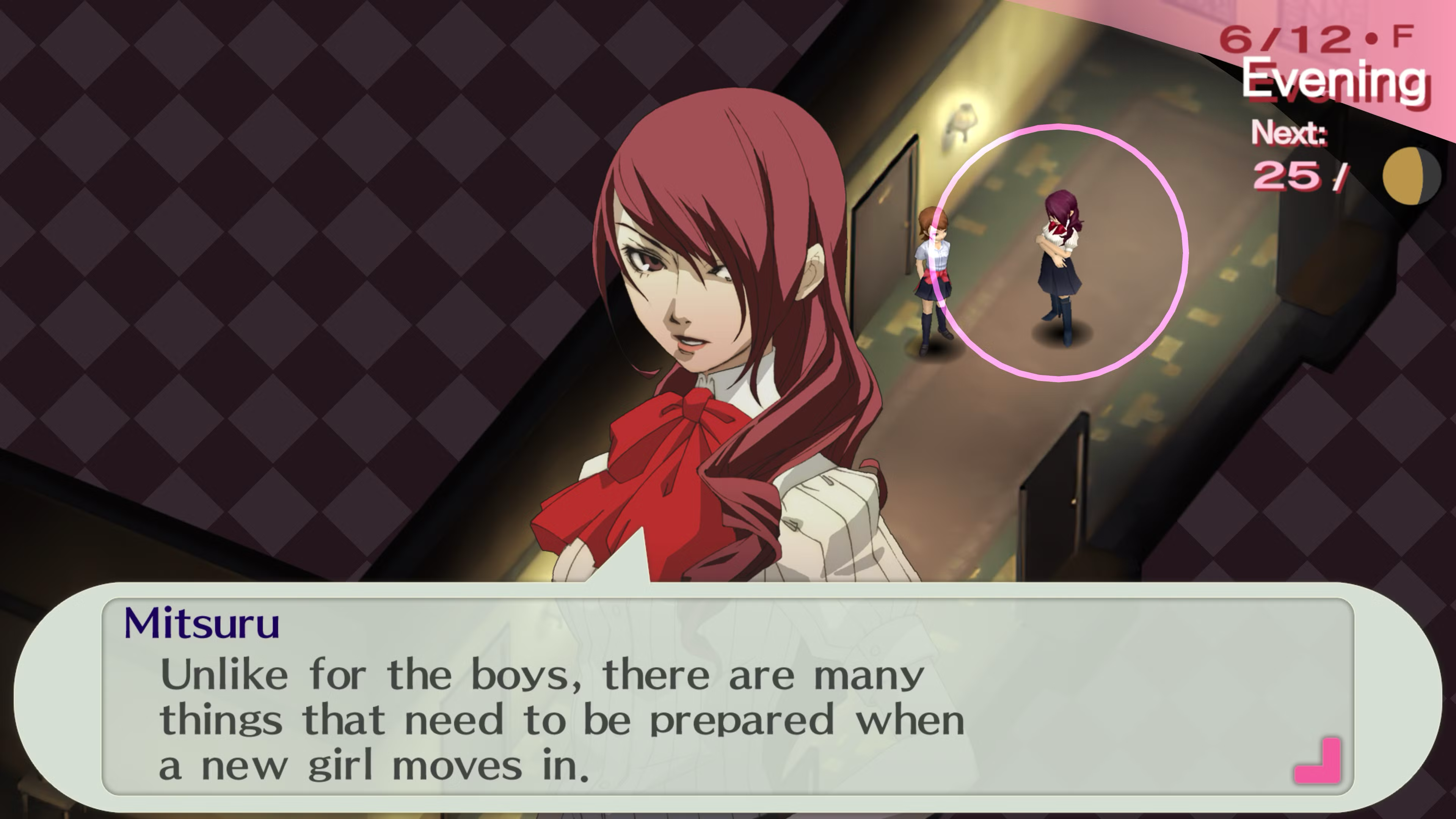
And while both approaches may be viable for different games, they ultimately produce a different experience from the one that was originally created. Instead, I believe that games with explicitly gendered protagonists should broadly shift away from treating those protagonists as direct player self-inserts. More recent Zelda games have expanded Link’s role from player-analogue to defined character, whose personality and history with the world is conveyed alongside the player’s actions. While more recent Dragon Quest titles do something similar, they ultimately end up treating their protagonists as quantum-self-inserts: simultaneously defined characters with their own history as well as player analogues. In doing so, the games’ end up alienating anyone who doesn’t fit the presumed straight male audience.
Gender roles are deeply rooted into every level of society and consequentially, deeply rooted into the stories we tell. While it’s disappointing when self-insert protagonists are gender-locked, attempting to change this requires far more substantial changes than a rudimentary pronoun swap. While it’s disappointing how Dragon Quest and other JRPG series have largely shied away from doing so, it is only by being conscious and proactive about gender in future titles that the games will support more customizable protagonists. But games are played by far more than cisgender straight guys and failing to broaden their target demographics accordingly is only stunting the medium’s potential.