I Don't Know How to Feel About Star Fox (2026)
In the current landscape, another remake was the only choice
may Updated 07/04/2026 923 words 5 min read

 Updated 07/04/2026
 923 words
 5 min read
I Don’t Know How to Feel About Star Fox (2026)
Star Fox has been retreading the same ground for a while. Star Fox 64 is itself a retelling of the Super Nintendo’s Star Fox (1993), and following the DS’ Star Fox Command in 2007 every successive release has either been a remake (Star Fox 64 3D) or reboot (Star Fox 64) of that exact same story. And to some extent, I really can’t blame them. The original Star Fox (1993) presents a pretty solid foundation, one that Star Fox 64 expertly built on by weaving in memorable character moments and interactions. Each successive title failed to hit nearly the same impact, and Star Fox Command’s multitude of endings left the series’ future in a pretty confusing state. When the average person thinks about Star Fox they think of Star Fox 64 and every attempt the franchise made to move out of its’ shadow only served to distance it from what they liked.
Any serious attempt at continuing Star Fox was going to have to return to what worked, and it feels unfair to Star Fox (2026) to blame it for following up on Star Fox 64 3D—a perfectly competent technical showcase for the 3DS that was never attempting to be anything more—and Star Fox Zero—a poorly executed reboot attempting to sell a failed console far too late to change its’ fate. From a business perspective, I perfectly understand the justification for Star Fox (2026), and with the original game available on every Nintendo console since the Wii it’s hard to find issue from a preservation standpoint—anyone who wanted to play the original more than likely already has.
But from an artistic standpoint, Star Fox (2026) is weird. I don’t want to discount the clear work that went into the game; Velan Studios has poured a ton of attention to detail into every aspect of the game’s aesthetic. While the game plays nearly identically to the original, it’s clear that this remake has an entirely different goal. Where the original was a technical showcase, delivering a tightly scripted cinematic action game, those same cutscenes, environments and interactions aren’t nearly as impressive on modern hardware. Instead, the game attempts to sell audiences on the idea of Star Fox—the new game is a graphical showcase, greebling every surface of the original’s landscapes with as much detail as possible. The characters have been redesigned and expanded cutscenes between missions bring the narrative presentation in line with modern standards.
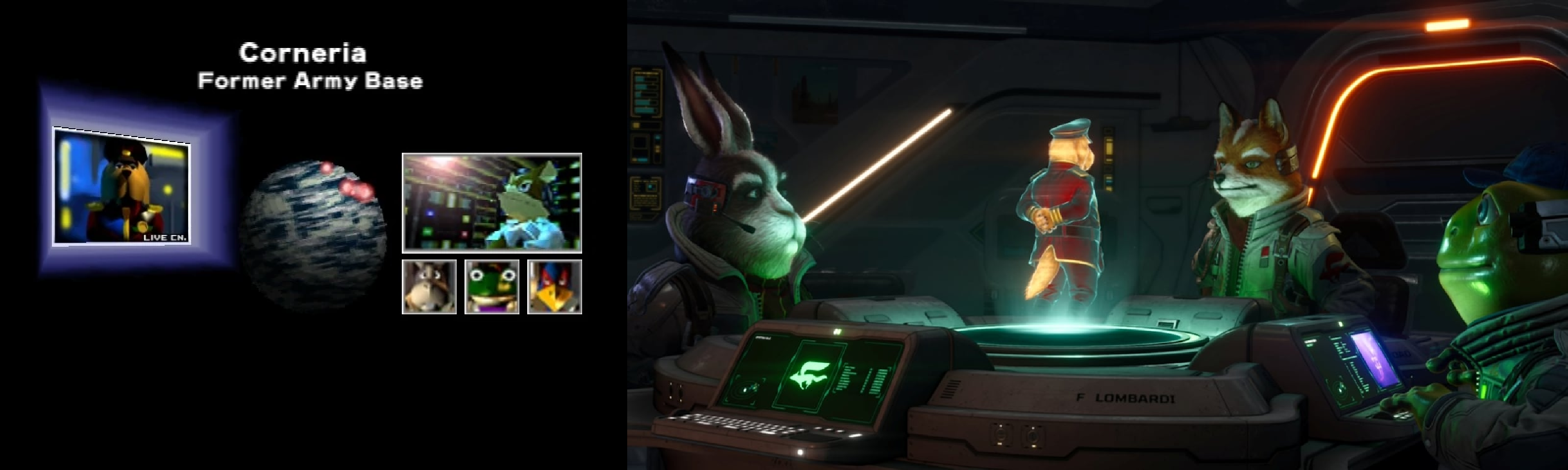
It’s a repackaging of 30-year-old gameplay for a new audience, an audience who isn’t excited by the original. And as much of a shame as I personally find that, it’s hard to blame any individual remake for the systemic issues at play—the video game industry has always been terrible at preserving its’ history; even when the games themselves are accessible (as Star Fox 64 is), the industry largely sells games as tech rather than art. Remakes are objective improvements because of their more powerful hardware, game design is a problem to be solved rather than subjective choices to be made. The AAA games industry in particular has done everything to push people away from older titles and towards newer ones, and the older titles that are available are primarily done so for nostalgic purposes. This isn’t a problem that Star Fox (2026) could have solved, and while the game isn’t for me it’s hard not to mourn what was lost in translation.
Star Fox (2026) is an incredibly busy game. Characters are always talking, the radio chatter from the original fleshed out with even more dialogue to the point of excess. The game’s environments are brighter, more colorful, filled to the brim with details to spot on your third, fourth, or fifth run through. But in doing so, they lose much of the atmosphere of the original. Space isn’t a vast expanse, but something to be filled in.
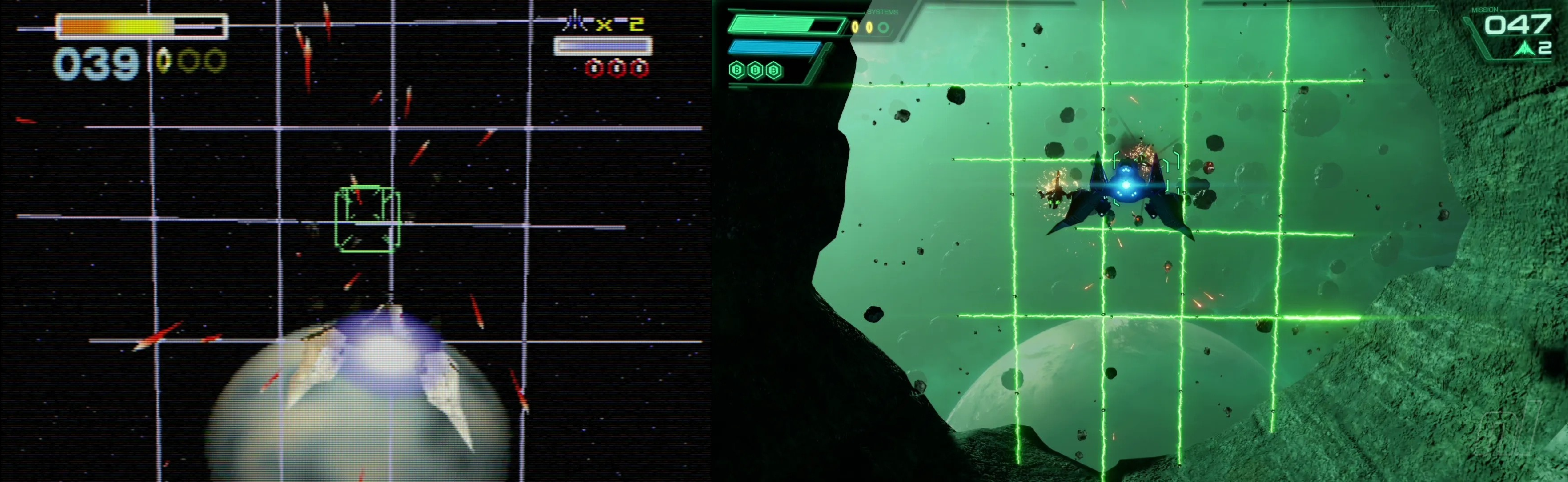
We live in the era of the video game remake. The AAA games industry has rapidly reached a point of unsustainability—chasing after the cutting edge that publishers have trained players to expect has become more and more expensive, and remakes are a safe way to guarantee return on that investment. These remakes attempt to simultaneously capture nostalgia towards their original titles with the idea that those same games are fundamentally outdated, to an audience that just keeps clamoring for more.
2026 is a very depressing time for games, from the continuation of mass layoffs across the industry to the death of the physical disk. And in that environment, Star Fox (2026) sits weird. It’s hard to imagine a future for Star Fox without it, yet feels so wholly emblematic of the ways the games industry has shifted. It’s not a game for me—as most of these remakes aren’t—and while I have little reason to ever revisit it, I find the game harder to hate than many of its’ contemporaries. It’s going to take a much larger systemic shift to address the collapse of the AAA game and a much larger cultural shift to view games as more than just products. But until that happens, Star Fox (2026) was really the only choice.