Ocarina of Time and How We Fail Remakes
How remakes are more than replacements and the fallacy of a "definitive" edition
may Updated 11/11/2026 1.4k words 8 min read

 Updated 11/11/2026
 1.4k words
 8 min read
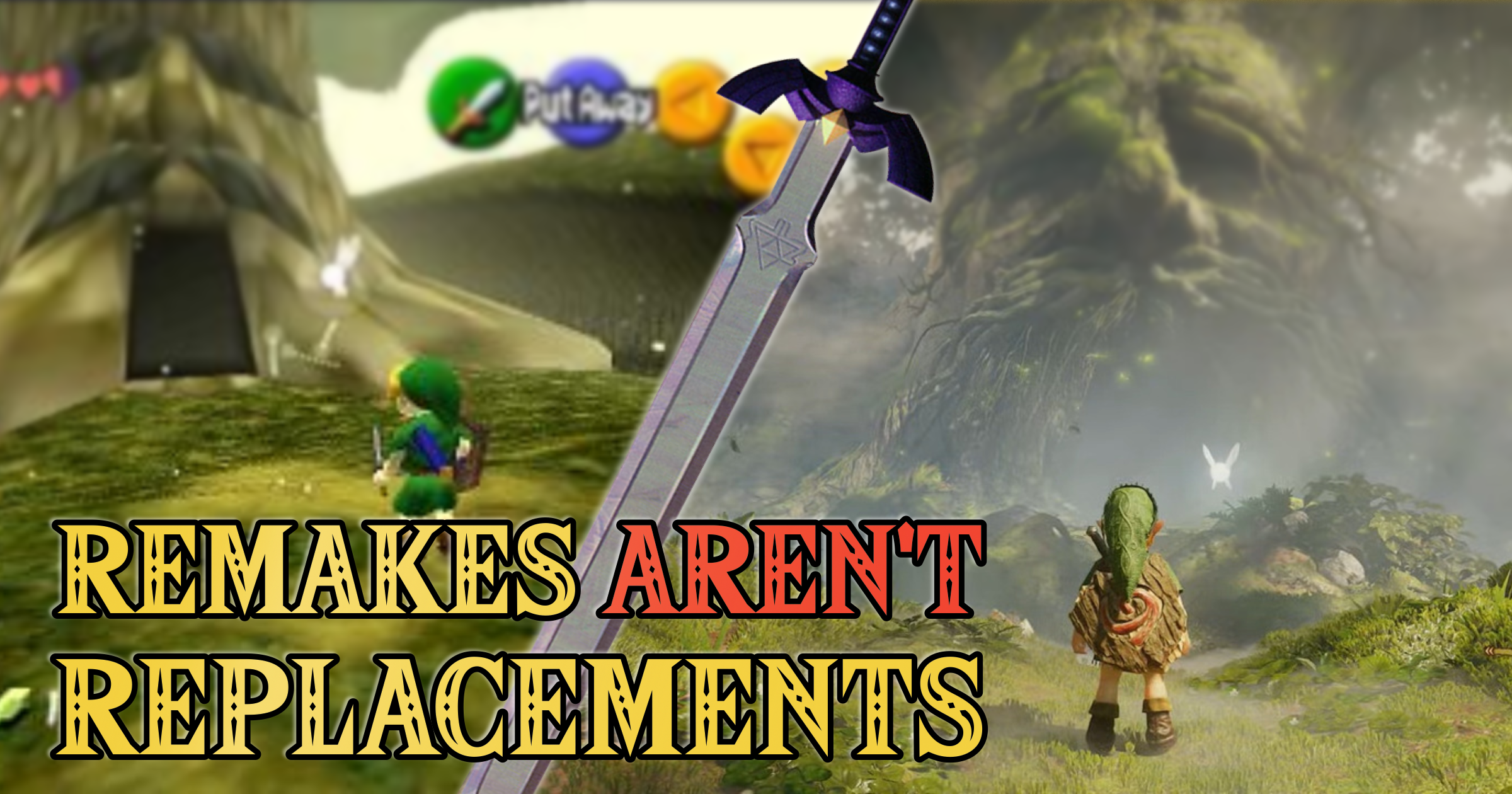
I had fairly low expectations going into The Legend of Zelda: Ocarina of Time's Switch 2 remake1. That isn't to say that I was expecting it to be bad, just that I was expecting it to be too safe to justify itself over the original. Following initial gameplay footage, I had a number of reservations about the game's visuals and voice acting, and the most exciting part of the reveal was seeing how a couple puzzles were recontextualized into their environments. My biggest hope was that the game would be full of these details, and that these details would justify the experience. While I could go in depth on every single change and whether or not they worked for me in comparison to the N64 version, to do so would be to fall into the same framing I'm trying to critique: framing the Ocarina of Time remake as a potential replacement for the original.
Video games are deeply interlinked with technology more than any other medium. Consequentially, games are often discussed as if they're tech products, ones that can be iterated and improved upon simply by using more powerful hardware to boost technical numbers and ones where any friction or inconvenience are problems to be solved. But games aren't just tech products—they're also art, and these "objective" improvements and modernizations come with their own consequences. The way that we discuss these remakes, the way we frame them as iterative upgrades that live or die by their capacity to replace an original title as the "definitive" way to experience a game, isn't just unfair to those original titles but unfair to their remakes as well. Remakes are not replacements but alternatives, an opportunity to experience a different version of a game created in a wholly different context.
Both the N64 original and Switch 2 remake allow you to experience Ocarina of Time in abstract, though neither can replace the experience of playing the other. If the N64 original represents Ocarina of Time in its' purest form, than the Switch 2 remake is a reflection of it nearly 30 years later—an iconic title whose legacy looms over the games industry.
Ocarina of Time follows a number of remakes of similarly legendary games over the last few years, games like Resident Evil 2, Final Fantasy VII, and Nintendo's own Star Fox 64. And while each of these remakes takes a very different approach to their source material, the conversations around them have a lot in common.
There's a lot of focus on "improvements" to the original titles, free wins over the originals which largely fall into three categories:
"Technical" improvements largely follow a "more = better" philosophy: Higher polygon counts, framerates, resolutions will always win out over their original counterparts2. Many of these original titles were deliberately framed around their original aspect ratios, or used their lower resolutions to blend together 2D and 3D assets or otherwise imply more detail in their environments.
"Quality of life" improvements, on the other hand, are about reducing friction in a game's gameplay systems; the Ocarina of Time remake features quick toggles for equipment, a detailed quest log, small tweaks to a number of dungeons, a run button for faster traversal, and gyro controls for aiming.
Lastly there are "modernizations", which frame aspects of a game's presentation or even certain gameplay systems as fundamentally outdated. Text boxes are replaced with voice acted cutscenes, pre-rendered environments are realized as fully 3D environments, synthesized soundtracks are replaced with orchestral recordings.
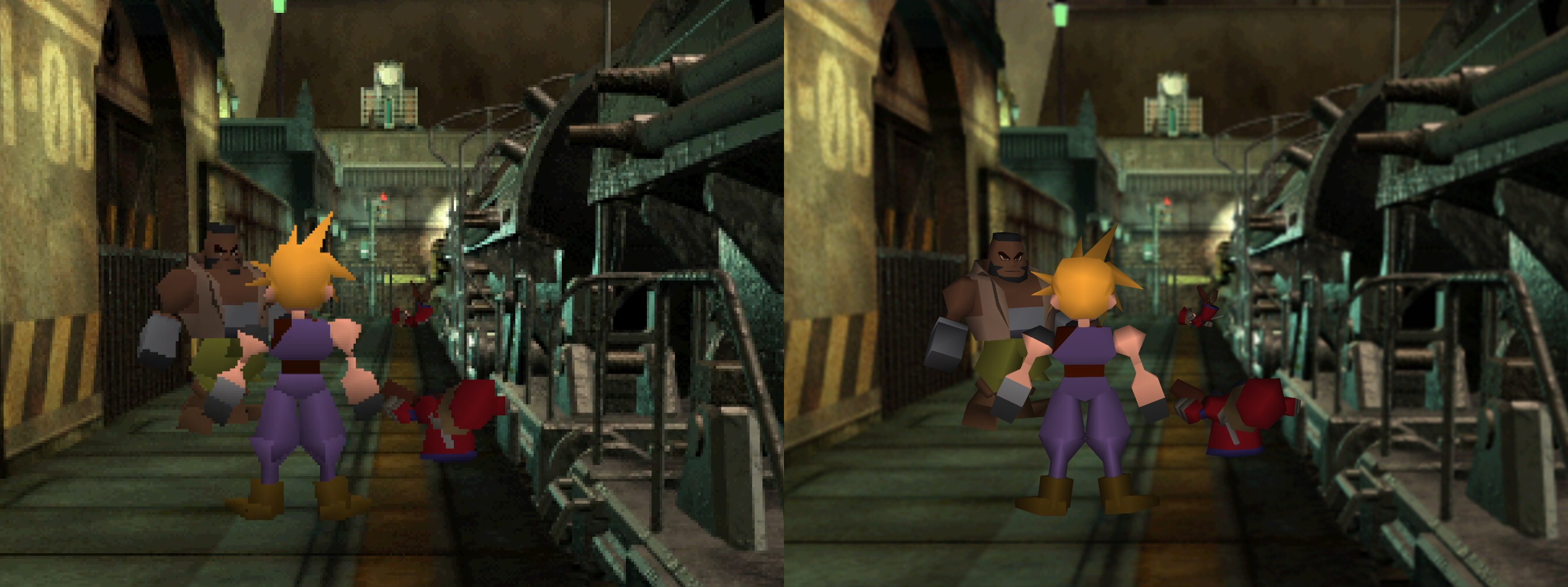
This isn't to say that any of these changes are bad, but that they aren't free; much of Final Fantasy VII and Resident Evil 2's deliberate framing is lost in the transition from fixed camera angles to full player control, Ocarina of Time's newly voiced cutscenes immediately draw attention to themselves as important in comparison to the game's standard text boxes, Star Fox's busy and detailed environments lose the vastness of the game's space stages.
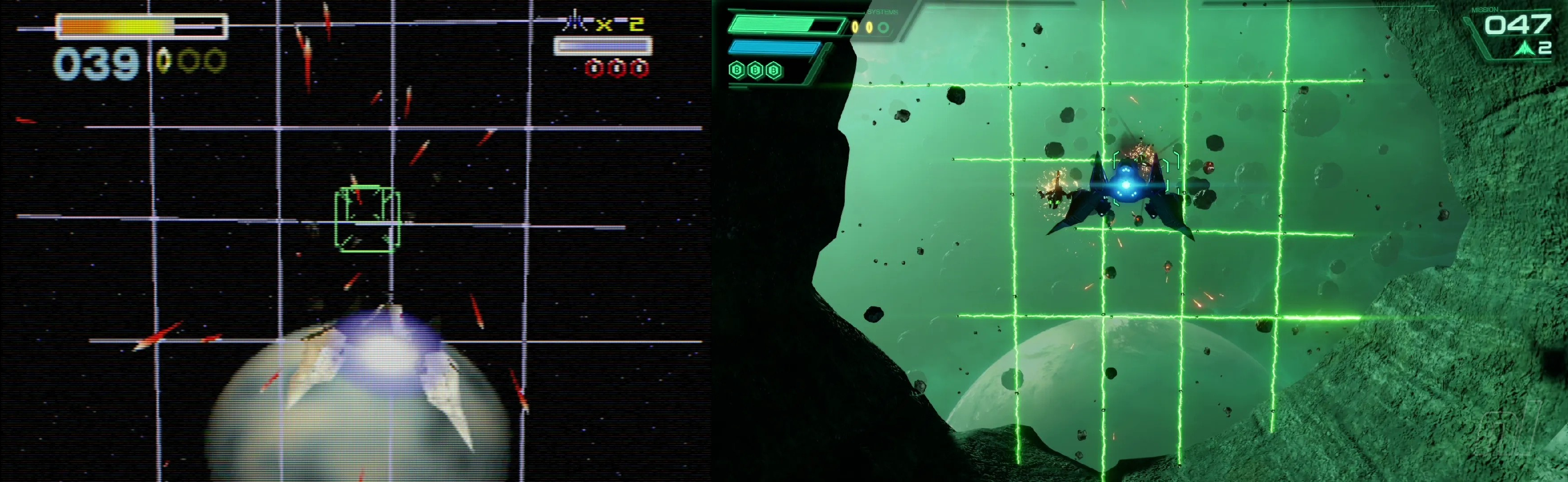
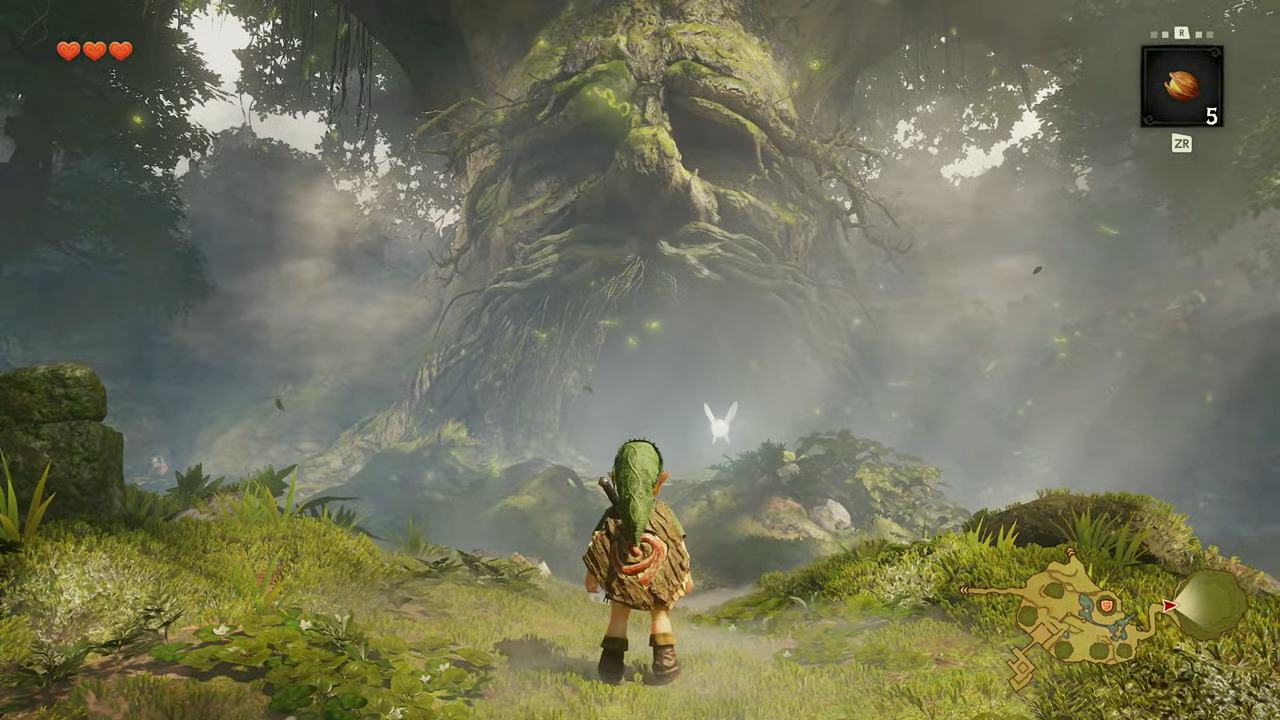
It would be easy to fixate on these losses and discount these remakes, but to do so is to dismiss the perspective that they offer on their original games: Star Fox reflects an attempt to adapt the original game's cinematic flair for an era where every mainstream game tries for cinematic presentation, Final Fantasy VII Remake's narrative offers direct commentary on the pressures and impossibilities of remaking such a legendary game3. Ocarina of Time highlights the intricacies of the original game's design with so many added details, while preserving the grandiosity of its world through some incredible use of forced perspective while maintaining the same relative scope.
A remake can also highlight the ways that their original titles utilized their limitations, even when that remake's attempts to escape those limitations ultimately fall short. I hadn't noticed how carefully the original Link's Awakening framed its world around a fixed screen size until the 2019 remake unlocked the camera—nor did I realize just how much the friction of manually swapping in the sword encouraged me to experiment with other items. Metroid II is one of my favorite games of all time, but it took two dramatically different remakes—2016's fan-made AM2R and 2017's Samus Returns—to fall in love with how unpleasant the original is to play and the ways that unpleasantness enhances every aspect of the game's narrative and atmosphere4.
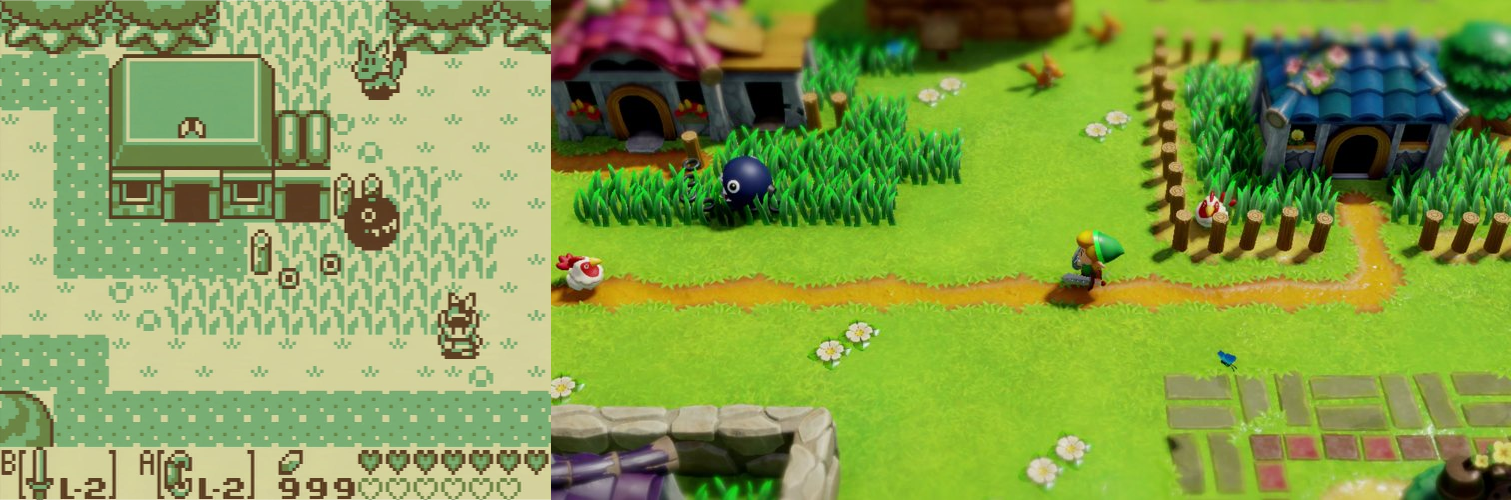
This isn't to say that there aren't bad remakes or that remakes shouldn't be judged in relation to their original titles, only that these remakes have so much more to offer us than replacements for their original games. One of the Ocarina of Time remake's many changes is the addition of Breath of the Wild-style dialogue choices which allow the remake's writers to expand on the original game's silent characterization of Link. Ocarina of Time's Link has always been a fairly tragic figure, a literal child forced to grow up too soon. A recurring bit throughout the remake is the way that Link repeatedly mispronounces words he hears for the first time, highlighting his status as both an outsider and a kid. It's a trait that continues after the seven year timeskip; despite his adult body this Link is still the same kid. And while the Ocarina of Time remake's Link isn't the exact same Link from the original game, it's something that I'll take back with me to my playthroughs of the original, something that will forever inform my understanding of his character.
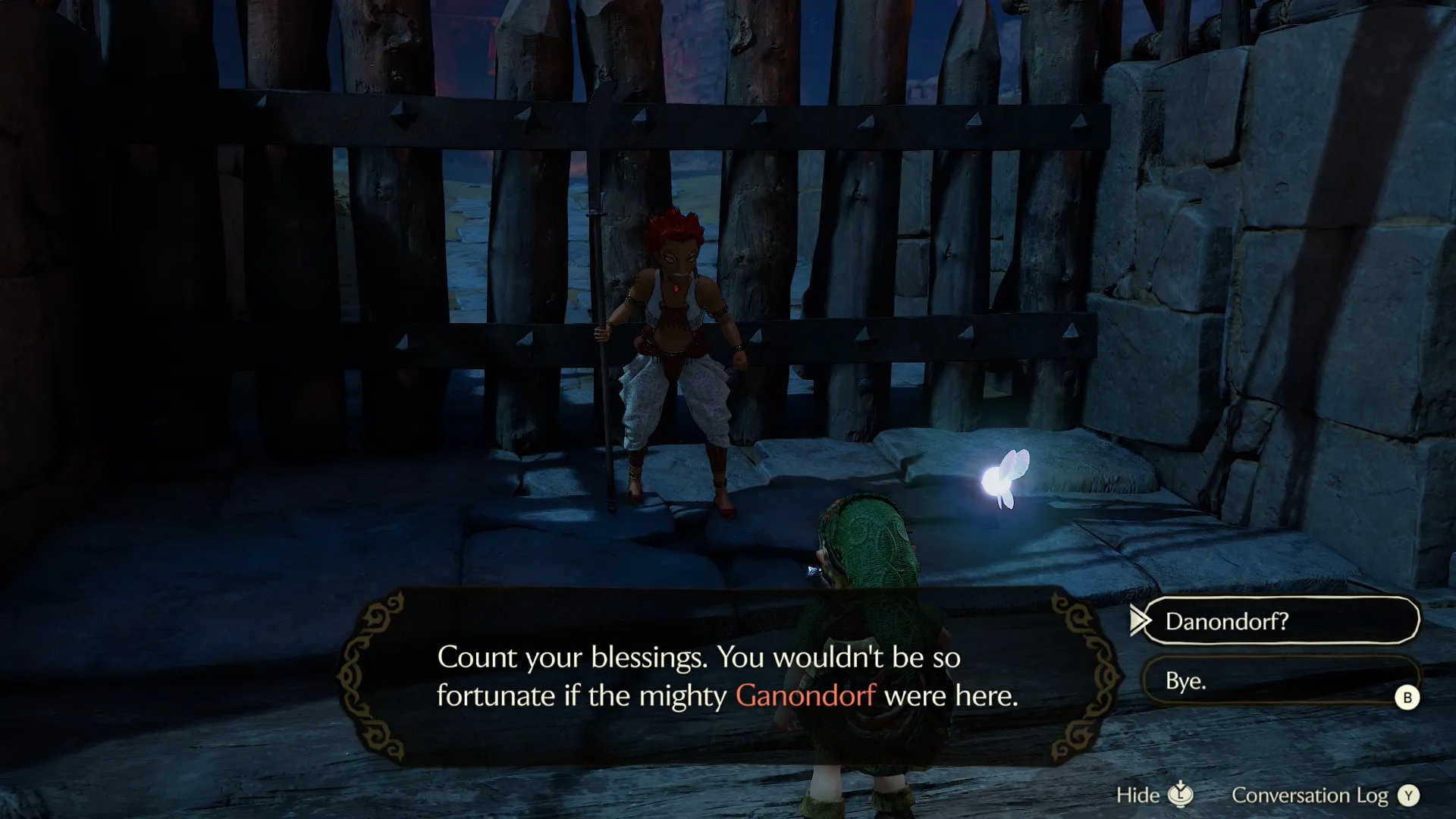
While incredibly safe, the Ocarina of Time remake is itself incredibly ambitious. Attempting to capture a game as legendary as the original Ocarina of Time is no small feat, and something that the remake largely succeeds at. But the Switch 2's Ocarina of Time isn't the original N64 Ocarina of Time, and to treat it as a replacement is to do a disservice to both titles. Playing the remake has enhanced my understanding and appreciation for the original work—even when I disagree with some of the remake's individual choices—and isn't that what a good remake should do?
It's frustrating to see conversations around remakes fall into the same traps over and over again, to pit remakes against their original titles as if both can't coexist. But when publishers use this framing to sell these remakes, when journalists reinforce it in their coverage at the demand of players who continue to treat games as products to be consumed rather than artistic works, everyone suffers for it. But we can choose to see these remakes are more than replacements, to appreciate the perspectives they offer. And while the sad reality is that the vast majority of people will default to the newest versions of these games without going back to their original counterparts, there will be people do so because of these remakes, and that's something that should be celebrated.
Footnotes
- We really need to stop reusing the same titles for remakes; it's so hard to defend these games from being seen as replacements when they're branded like this! ↩
- This frequently applies to emulation and "recomps" of these original titles as much as it does remakes— and even some official remasters—where blindly cranking up a game's internal resolution and aspect ratio often massacres its' presentation in the process. ↩
- Final Fantasy VII Rebirth is a fun theme park and the less is said the better ↩
- There isn't enough space here to go in full detail on Metroid II and how neither remake captures the experience of playing the original, but just know that I'm holding back so much right now. ↩